

I watched Bad Bunny’s halftime performance at the Superbowl in 3D, sugar cane receding into the distance, dancers popping off the screen toward me.
When I watched Alfred Hitchcock’s classic 1943 movie Shadow Of A Doubt in 3D, it looked like the train was actually moving toward me as it pulled into the station in Santa Rosa.
All of my family photos are in 3D. Browsing through the photo album is wild.
I’m not often taken by surprise when new technology is released. When you’re a nerd, it’s a point of pride to keep up with technology instead of, say, developing social skills. I scan hundreds of articles every day so I can see what’s coming and look smug when someone describes something new.
Xreal surprised me last month when they added a feature to the Xreal One glasses to add 3D to anything. It was a surprise because (1) I didn’t know anything about it ahead of time, (2) it was a free upgrade to a product I already owned and are you kidding?, that never happens these days, and (3) it works.
That last part is the most amazing bit of all. Let me give you some background, then try to describe a visual experience in words.
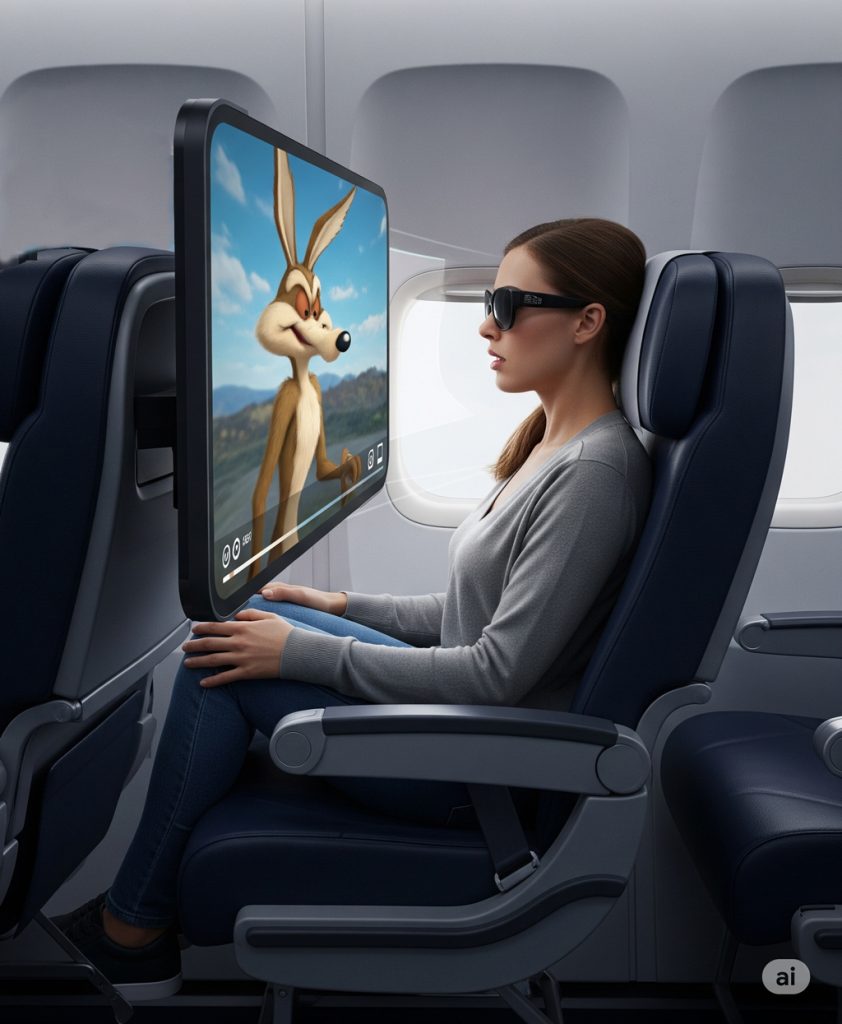
Remember the Xreal One augmented reality glasses? I wrote about them last summer. They look like slightly bulky dark glasses. They’re a wearable display, a portable monitor. When they’re plugged into a phone, iPad, or computer, you see a crisp 120 inch display hanging in the air in front of you. They’re for media consumption while you sit in place, not for walking around.
The Xreal One glasses can pin a screen in place so it stays in place when you move your head. It sounds easy but it’s quite a technical feat. Glasses from competitors like Rokid and Viture aren’t smart enough to do that without help.
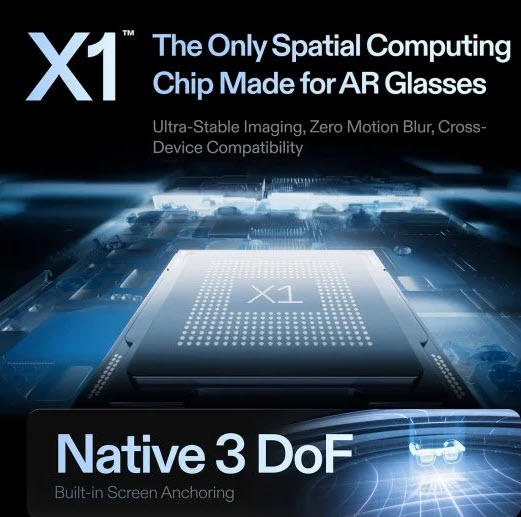
The secret is the X1 chip, a tiny custom processor in the glasses frame. It handles the incoming video stream with minimal power consumption. Even better for geeks, it’s a Neural Processing Unit (NPU), which roughly translates as “the same kind of chip that makes AI work.”
Xreal opened the trade show CES on January 4 with the announcement of Xreal 1S glasses, slightly updated and a bit cheaper than the Xreal One Pro glasses. I knew there were new glasses coming because, nerd, right?
But they added one thing with no warning. “Real 3D” software converts any incoming signal to 3D in real time with virtually no lag – movies, streaming videos, locally stored media, photos, games.
Two weeks later, Xreal released new firmware to add Real 3D to Xreal One and Xreal One Pro glasses like mine – for free, no fuss, a quick update and a new option in the settings menu.
Because it’s all done on the fly by the glasses, Real 3D doesn’t require special video files or any external apps, and it doesn’t raise any DRM flags for Netflix to get excited about.
Curious about the technical details? Of course you are. Xreal described it this way to Road To VR: “Real 3D uses the X1 chip’s NPU (neural processing unit) to perform depth estimation inference on every incoming frame and to generate the corresponding left- and right-eye views with depth relationships.” That’s what you would have guessed, right?
As of February 2026, nobody but Xreal offers a feature like this, period, full stop.
What it’s like to use Real 3D
The 3D effect is an option. The glasses work exactly as they did before – plug them into an iPad or computer, a big screen appears in the air in front of me showing what’s on the screen, audio comes out of the stems of the glasses. I have to click a button to change it into 3D.
I click the button and I see 3D wherever that makes sense. The words on web pages don’t look different but photos and pictures on a website look like they have depth. Movies look like they do through funky 3D glasses at movie theaters. Flat screen games become 3D environments. Cyberpunk 2077 looks awesome.
The effect isn’t perfect. Sometimes the chip guesses wrong and the 3D isn’t right. Sometimes edges are fuzzy or clipped. Not very often. There’s a setting to make the 3D treatment more or less pronounced. The frame rate is limited to 30FPS right now and there’s lag that’s noticeable in twitchy action games, but being irritable is a core part of high-speed shooters so, no surprise that some youngsters say it’s not right yet.
Mostly it just works. It looks great and it’s kind of magical. There’s no such thing in 2026 as universal praise but feedback on Reddit and from reviewers is overwhelmingly positive. Xreal says further updates will improve performance and increase the frame rate – and Xreal has overcome my cynicism for now. I want to believe them.
Xreal is making a play to become a major player in the tech world and jump ahead of competitors. It’s a Chinese company that has raised a bunch of money and apparently hired all the best engineers. Look for an Xreal IPO later this year or early in 2027.
Later this year Xreal intends to release glasses that combine Google AI with visual AR overlays running Android XR – codename Project Aura. Meta’s AI glasses are flying off the shelves but Xreal’s tech combined with AI powered by Google Gemini has the potential to create an explosive new market. Xreal CEO Chi Xu has consistently stated that the “iPhone moment” for spatial computing—where the technology moves from a niche enthusiast product to a mass-market necessity—will arrive in 2027.
The Xreal One Pro glasses were already one of my favorite tech toys. Now a free update that makes movies look better with no fuss? Oh, bliss.