

Bruceb News will be on hiatus until late October, while I travel with some of the best people in the world to Spain. I’m assured the country is filled with people who still like Americans, which speaks volumes for their generosity after the last twenty months.
Oh, for goodness sakes, don’t start weeping, you’re embarrassing me. It’s only natural that you’re nervous and upset but I have confidence in you, you will be strong and you will muddle through without me. I’ve been assured by top authorities that there won’t be any important news in the next month, which is great because I don’t know about you but I’ve gotten the teensiest bit worn out by current events.
You might have missed a few articles – maybe an oversight or possibly poor life choices due to sloth and indolence. Here are follow-ups from articles that I wrote this year. See you in a month!
The patch deluge has begun
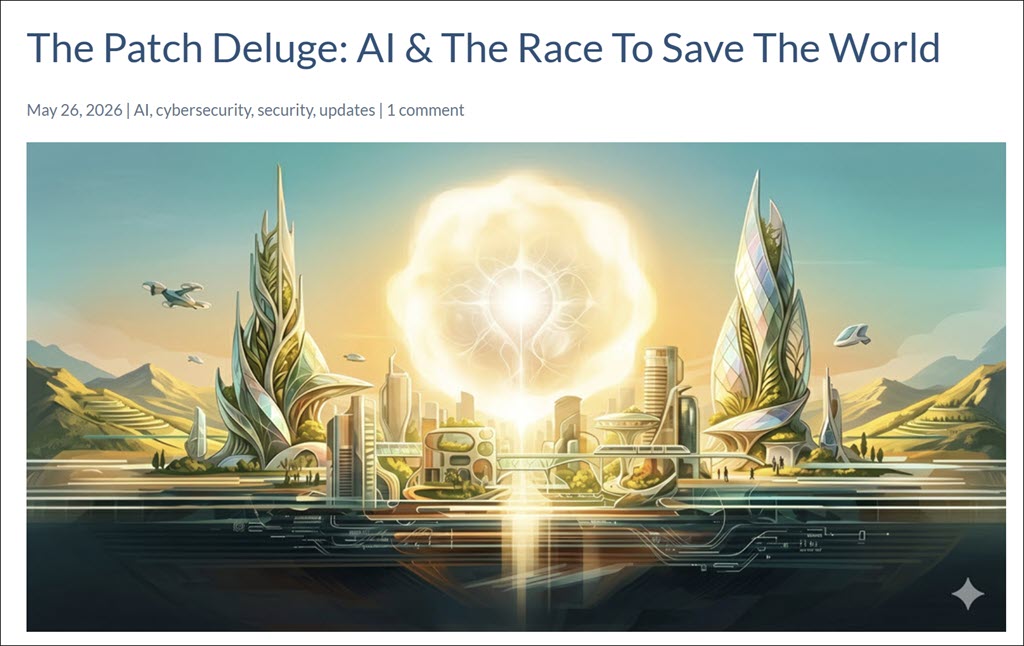
In May I told you to expect record numbers of patches as developers race to stay ahead of hackers using AI-driven tools. It’s happening even if you don’t see much on the surface.
This month Microsoft released fixes for nearly 1,000 bugs in Windows and Office. That’s twice as many as July, the previous record-holder, and nearly as many in one month as the total for all of 2025.
Google has stepped up its release schedule and will now update Chrome every two weeks to shorten the gap between discovery of security vulnerabilities and shipping patches for them. The latest version of Chrome includes 230 security fixes, the largest batch in recent history.
Oracle, Adobe, Cisco have all been delivering record-breaking numbers of fixes for their products in the last few months.
The threat is real. Bad guys are using AI to move faster than ever before. “At this point, we can assume that all threat actors are using AI in some capacity, and their operations have benefited,” according to John Hultquist, chief analyst, Google Threat Intelligence Group.
Brokers resist complying with DROP act

In April we talked about California’s new DROP platform. When you sign up with DROP, registered data brokers are ordered to forget everything they know about you forever and ever, amen. The brokers were required to start scrubbing their databases starting August 1.
You might recall I was the teensiest bit cynical. I tried to be gentle – how did I phrase it? Oh, yes: “Privacy is doomed and everything is futile.” Everything else is f*cked in this cursed year, why not privacy?
I’m sorry to report there are signs I was right about this one also. A few days ago, Stanford researchers reported in a new paper that less than ten percent of the data brokers had fully complied with the requirements of the law. Instead of complying, many data brokers threw up friction and dark patterns to make it harder for consumers to get their information removed.
The Mercury News spoke to report co-author Jennifer King, privacy and data policy fellow at the Stanford University Institute for Human-Centered Artificial Intelligence. “King said she thinks many companies she and her colleagues found noncompliant with the privacy law believe state privacy regulators are too overwhelmed by the amount of data collection they’re charged with policing, or that the regulators don’t understand the industry well enough to enforce privacy laws effectively.”
Golly, what a surprise. I’m shocked, SHOCKED to find that data brokers aren’t fully complying with a law that might cut their profits.

The Snapdragon revolution is running late
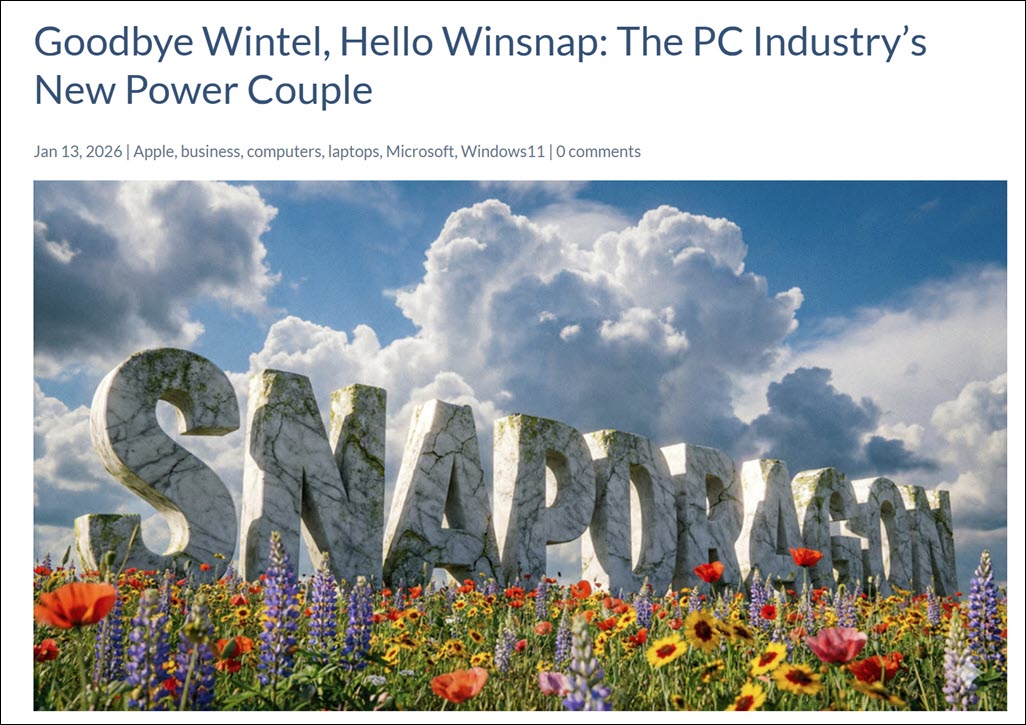
In January I predicted a permanent realignment of the PC industry. And I still believe it will happen, hallelujah and praise the Chiplord, my faith is unwavering.
It’s so obvious! My Lenovo Snapdragon laptop still makes me giggle every day, which is weird but overlook that part, I’m trying to make a point. It’s the best computer I’ve ever owned – wildly extended battery life, reliable fast startup, no heat or fan noise, full performance on battery, no compromises.
Intel has been in a slow motion collapse for twenty years and the stars were aligned for a revolution in 2026 that would dislodge the company from its long and undeserved rule over the world of PC processors. The new non-Intel processors were Microsoft’s chance to finally break out of its doomed relationship with Intel.
So I’m a little crushed that there’s no sign of a revolution. There are dozens of new Snapdragon laptops, most of them in the sweet sub-$1000 price spot, from Lenovo, HP, Asus, Dell, Acer, Microsoft, and others, but sales have been lackluster.
Never underestimate the power of a brand. Intel held onto its market share in part because it introduced a couple of new processors that are slightly less crap, although don’t overstate that, the latest Intel processors are still crap compared to Snapdragon processors.
But brand recognition matters and businesses are slow to change. People have gone right on buying the familiar Intel name. Snapdragon laptops have gone from 1% of the market to perhaps 2% or 3%, no more.
The war is not over but the names will change again. Snapdragon will still be a widely used marketing name but you’ll also see references to ARM or “Windows On ARM.”
Nvidia just announced Nvidia RTX Spark laptops, based on the same ARM architecture that Snapdragon processors run on. They are ultra-high end machines intended to run local AI models that need massive amounts of memory and levels of performance far above anything ever seen before. Prices will be multiple thousands of dollars, especially this year during the RAMpocalypse, a global shortage and extreme price surge for memory chips.
There will be some demand at the high end for the Spark laptops. Engineers, researchers, high-end 3D artists and animators, video editors, and privacy-obsessed professionals will buy them. This will be the most enthusiastic part of the market going forward, and that means Microsoft will stay committed to Windows-On-ARM – but the actual number of units sold to that niche is relatively small and the bulk of sales in the consumer market will still be Intel / AMD laptops.
So there’s no Snapdragon revolution in 2026. But if you’re shopping for a new laptop, do yourself a favor and get a Snapdragon laptop – they’re the best. Also, if you’re shopping for a new laptop this year, may god have mercy on your wallet. The memory shortage is driving prices up practically every day.
AI’s impact on society

Finally, new readers (Hi! Welcome! You’re my best friends!) might want to visit the five-part overview from last fall about the effect that AI will have on society. I got a lot of things right that are playing out today – the slowdown in entry-level jobs, the dangers of uncontrolled AI and the need for governance, and the excitement about genuine advances now underway in research and healthcare. The overview might help you understand today’s world a little better.
I’ll be back in a month. Please use the time wisely. I certainly won’t.